
Then and now
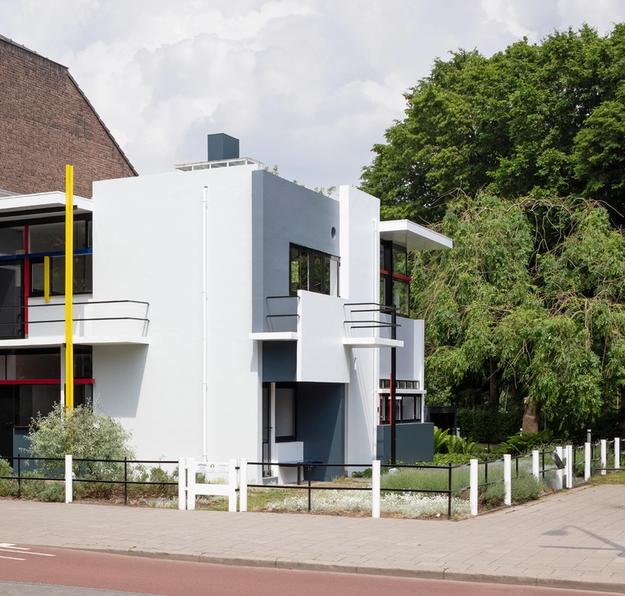
Little has changed on the outside over the past hundred years.
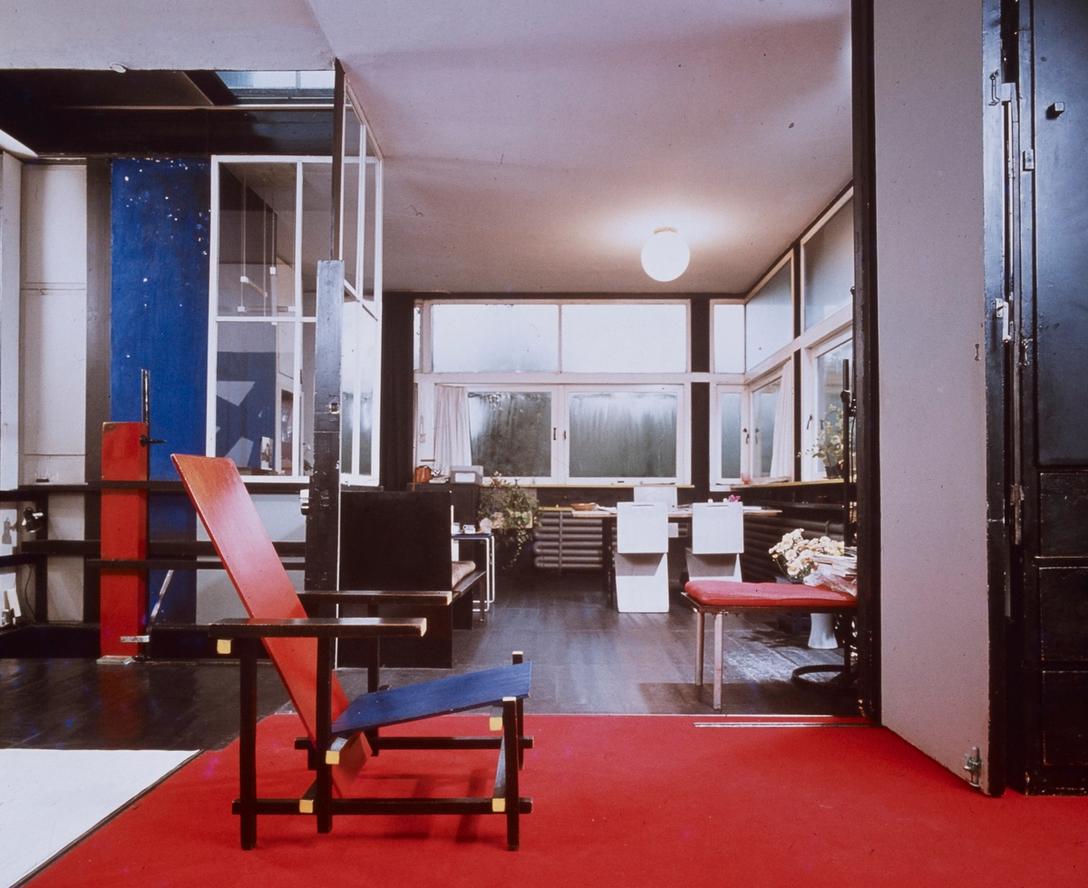
In 1924, Truus Schröder and Gerrit Rietveld built a ‘machine for living in’, in Utrecht. She would continue to live there for sixty years.
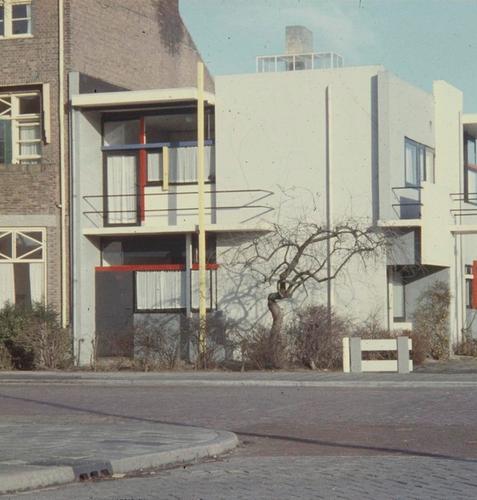

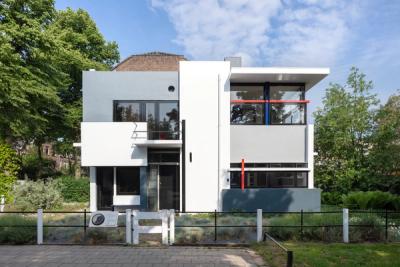
Schröder and Rietveld's design would become one of the most famous houses in the world: the Rietveld Schröder House.
They built the house on the outskirts of Utrecht. It grew into an icon of De Stijl, with its white façade, grey planes, and red, yellow and blue lines.
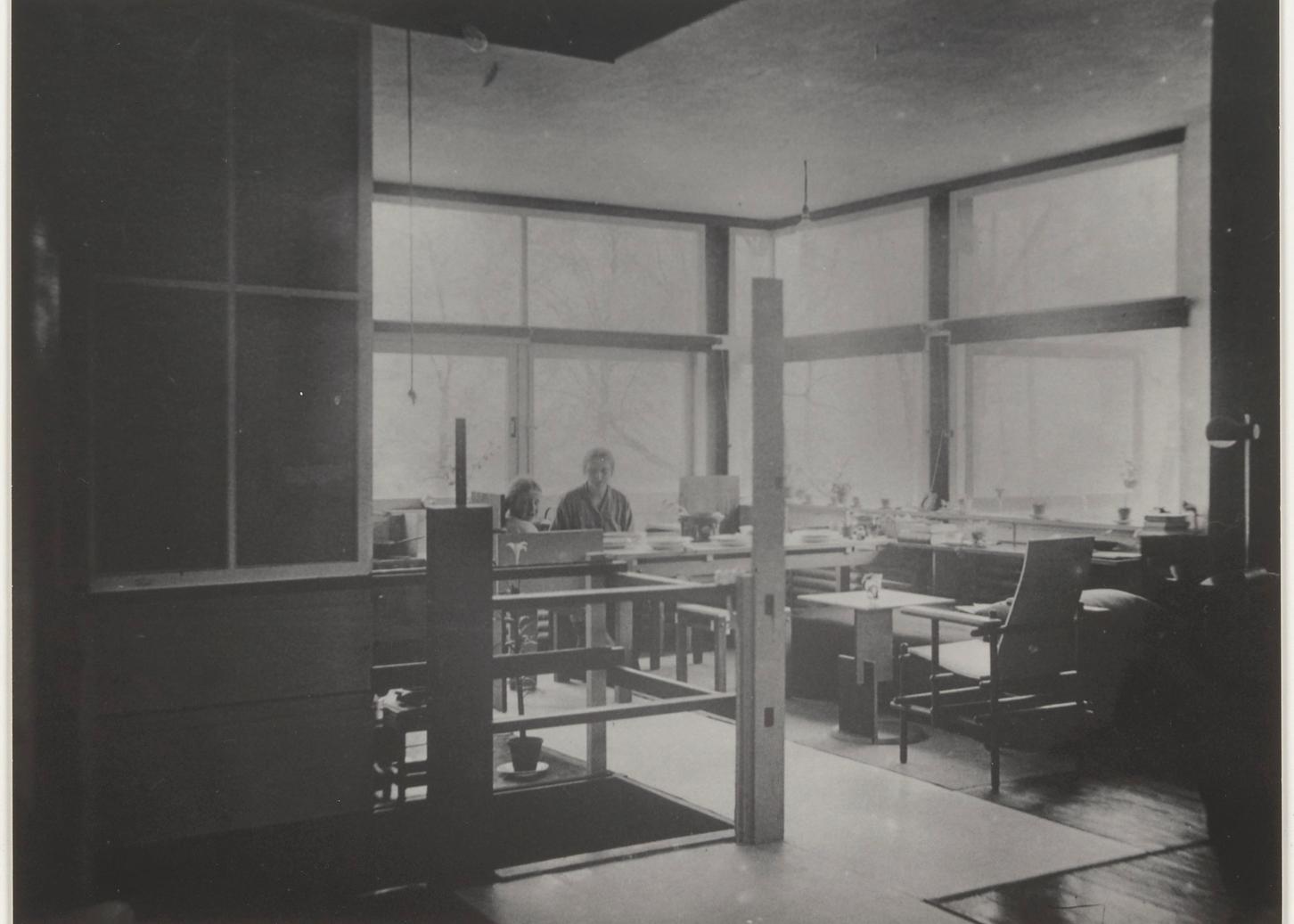
The house is striking on the outside and equally remarkable on the inside. Schröder had clear ideas about the interior: she wanted to live upstairs, with plenty of light. Living had to be be flexible, functional and with few possessions.
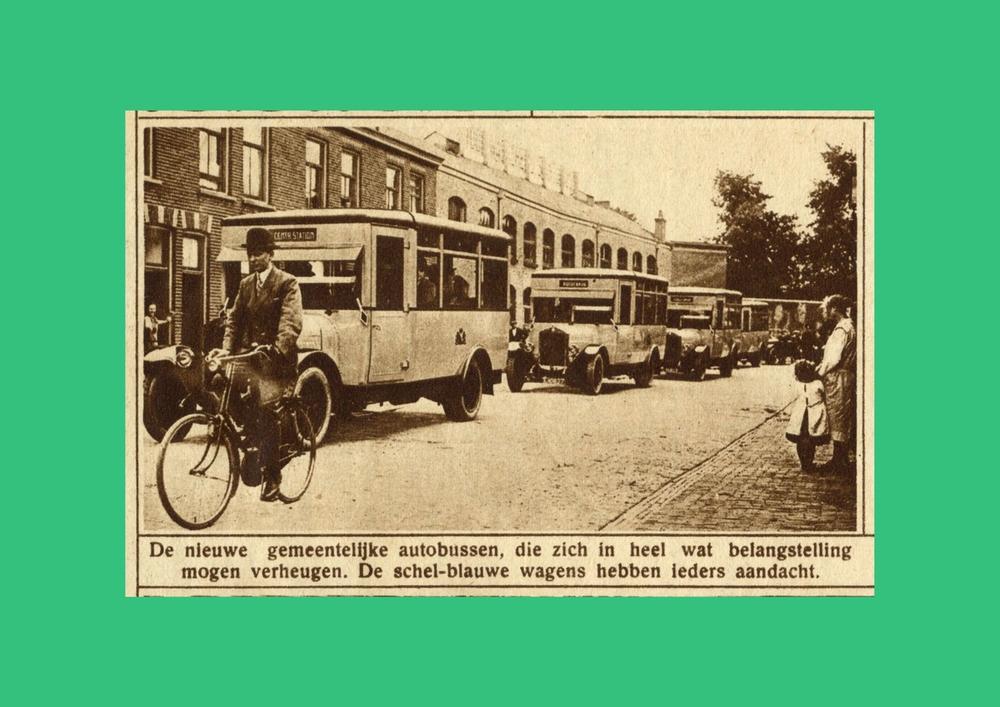
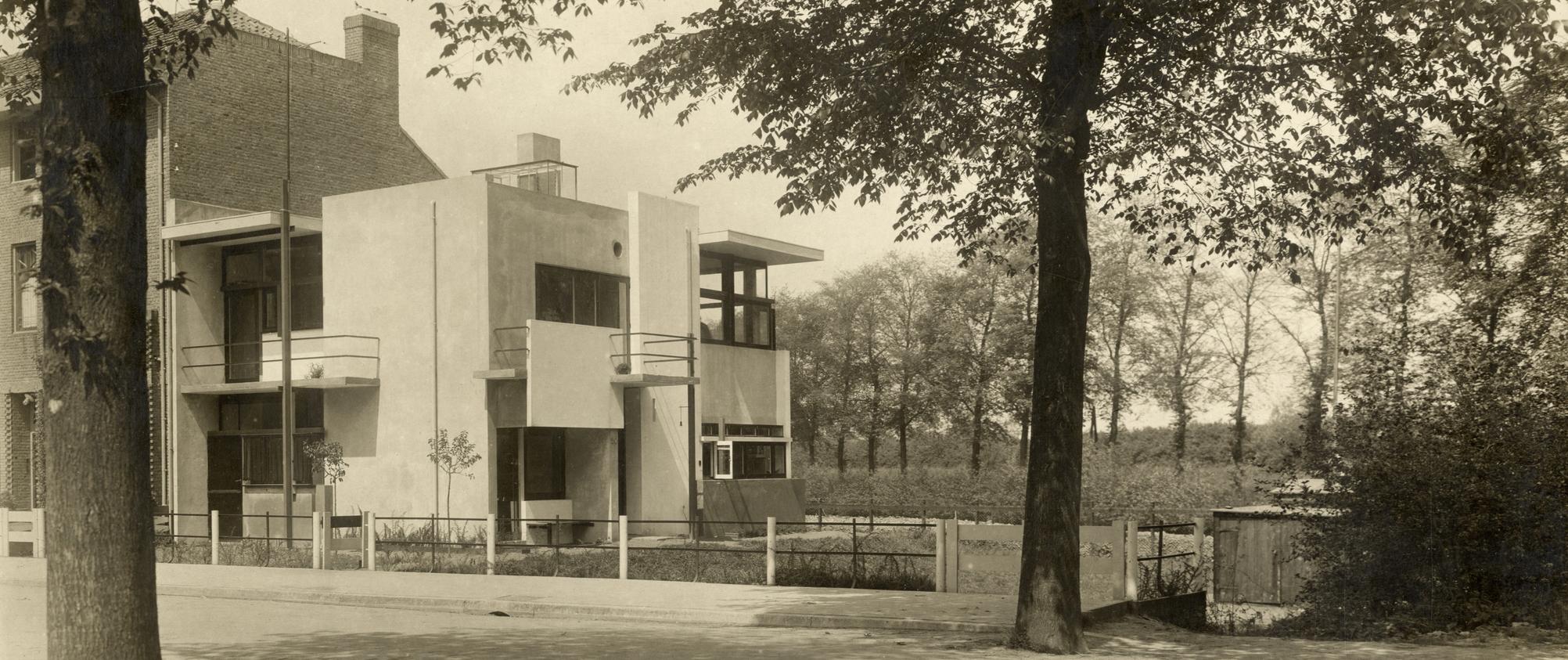
This photo was taken in 1925, shortly after the Rietveld Schröder House was built. It was the era of the motor bus, the bowler hat and the traditional Dutch 'omafiets'.
Imagine how bizarre that angular, brightly colored house must have looked to the people of Utrecht back then.
Little has changed on the outside over the past hundred years.
When Schröder moved in with her three young children in 1925, she thought she would only live there temporarily. Just until the children would leave home.
Things turned out differently. She stayed there for sixty years. And during those sixty years, she rented out rooms to students, added a storey on the roof that was later demolished, lived there with Gerrit Rietveld for seven years, moved the kitchen, and filled the house with boxes of archival material. And ultimately, she passed away in the house in 1985.
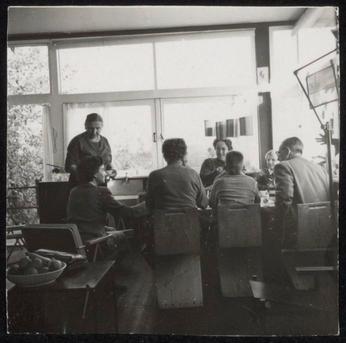
Truus Schröder with her daughter Han at the table.
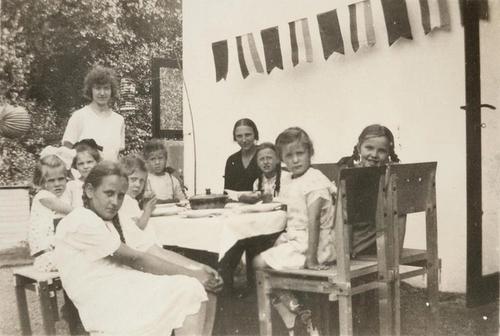
Children's party in the garden, in the 1920s.
The house was a place for both living and working. Not only for Schröder, but for Rietveld too.
Schröder left her home for only a short time. From 1933 to 1936, she rented it out to a Montessori nursery school. She temporarily moved to Erasmuslaan, across the street, where she lived in one of the other houses she designed together with Rietveld.
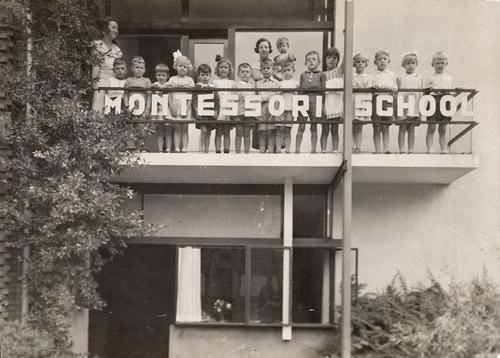
A name sign was attached to ohe balcony, and a sandbox and climbing frame were installed in the garden.
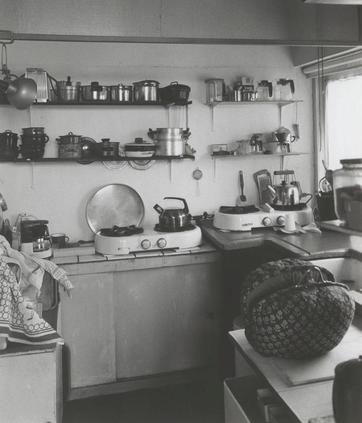
When the school moved out in 1936, Schröder renovated her house. The bathroom was refurbished and the kitchen was moved upstairs. She now lived mainly upstairs herself and rentred out the ground floor.
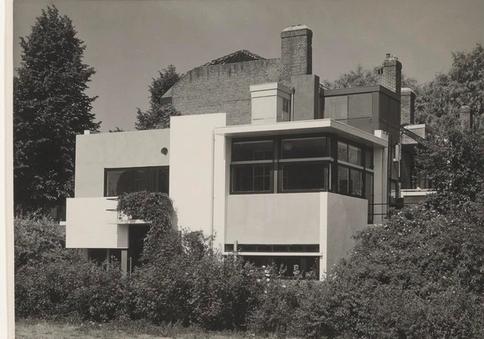
And on top of the house, Schröder buildt an extra room. This floor was later demolished again.
Truus Schröder liked to sit on a zigzag chair by Gerrit Rietveld near the open window.
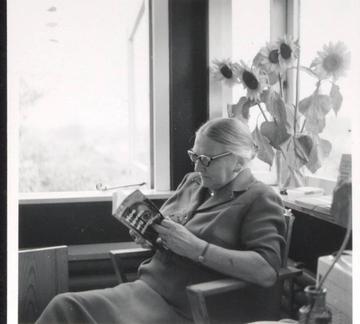
Writing about life in the house in 1970, Schröder says: "If someone were to ask me: can you recommend such a life, such a house, I would say: if you are content with a roof over your head and do not aspire to life at home, but very much want to live outwardly, reaching out to other people, then I say: no. The house demands a great deal of you, but it also gives a great deal. It can fill and enrich your life."
Despite the many demands the house placed on her, she has always loved it with all her heart.
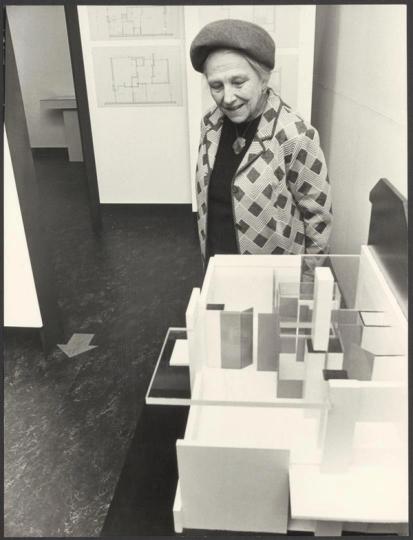
Truus Schröder beside a model of her house, at the exhibition 50 Years of the Rietveld Schröder House.