

In 2026, Centraal Museum presents the first major retrospective exhibition on Gerard van Honthorst (1592–1656). In Utrecht, the city where he was born, married and died, Honthorst is finally given the stage he deserves.
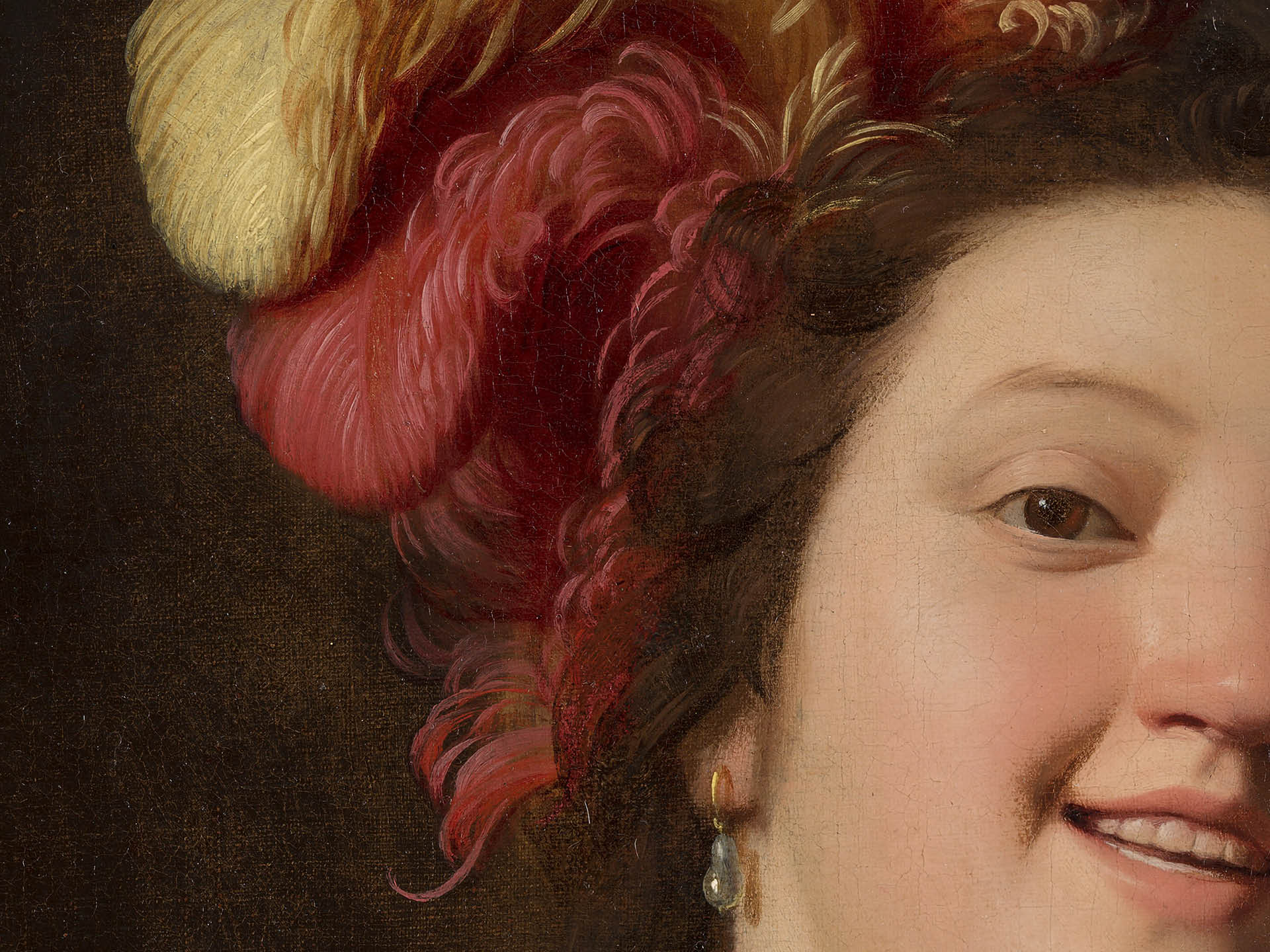


In 2026, the Centraal Museum presents the first major retrospective on Gerard van Honthorst (1592–1656). The Utrecht-born painter, a contemporary of Rembrandt van Rijn, travelled to Rome at a young age, where he was inspired by the work of Caravaggio, renowned for his large, lifelike figures and striking contrasts of light and shadow. In Rome, Honthorst gained a reputation for his dramatically lit night scenes, earning him the nickname Gherardo delle Notti (‘Gerard of the Nights’). This proved to be the beginning of a highly successful career.
In Utrecht, the city where he was born, married and died, Honthorst is finally given the stage he deserves. The exhibition brings together around 60 paintings and 30 drawings from international collections, including the Musée du Louvre, the Royal Collection and the Galleria Borghese, alongside works from Centraal Museum’s own collection.
Utrecht roots, Italian influences
As one of the few non-Italian artists working in Rome, Honthorst received prestigious commissions for altarpieces. He attracted influential collectors and developed a distinctive style, strongly shaped by the dramatic use of light and shadow that was considered revolutionary in Italy at the time. After returning to Utrecht in 1620, he aligned his work with local tastes. He painted lively genre scenes and musical gatherings, before increasingly turning to portraiture. Honthorst moved effortlessly between genres and patrons, establishing himself as a highly successful international artist.
He had a keen understanding of what his clients wanted and adjusted his style accordingly. By painting what appealed to them, he secured important commissions from royal and aristocratic families and across Europe. While art today is often seen as a form of personal expression, in the seventeenth century it was above all a profession, grounded in skill, reputation and earning a living.
Different to Rembrandt
Honthorst was one of the most successful artists in the vibrant artistic climate of the seventeenth century, a period now largely defined by the Dutch Golden Age and painters such as Rembrandt, Frans Hals and Johannes Vermeer. Yet in his own time, Honthorst and Rembrandt were the leading figures in the Northern Netherlands. Both were celebrated history painters with influential networks, major commissions and a large number of well-paid students.
Their approaches, however, differed significantly. As a young artist from Utrecht, Honthorst travelled to Rome and developed into a painter who adapted readily to the wishes of his patrons, eventually becoming a court painter. Rembrandt, by contrast, followed a more independent path. Although he received prestigious commissions in Amsterdam, he was less inclined to conform to the expectations of others.
Across four Centuries
Looking at Honthorst’s work today, you encounter something both familiar and unfamiliar. Faces, interiors and everyday scenes are immediately recognisable, as are universal themes such as love, pleasure and vanity. Yet the meaning behind these images is not always immediately clear. In the seventeenth century, visual language was rich in religious and moral symbolism that would have been instantly understood. A skull, for instance, symbolised the transience of life. In royal circles, the presence of children in a painting could signal the existence of healthy heirs and the continuation of a family line.
What was widely understood 400 years ago now invites closer attention and reflection. What do you recognise immediately, and what requires a second look? Throughout the exhibition, prompts, soundscapes, scent experiences and gallery facilitators help you to decode this visual language.
On display in De Stallen
Gerard van Honthorst – Different to Rembrandt will be on display in De Stallen. This exhibition space is located in the old stables of the former Agnietenklooster convent. Twice a year, a large-scale, theme-based exhibition is held here, focusing on one of our sub-collections: old, modern and contemporary art, design, fashion or city history. De Stallen is the museum's largest exhibition space.
In the Annex, the most recent work by Austrian artist Mathias Poledna, My Favourite Shop, is on display. This contemporary work is programmed as a reflection on the art of Gerard van Honthorst.
Surcharge
There's a one-time surcharge of €6 for this exhibition. If you plan to visit this exhibition, you can but your ticket online or pay the surcharge at the museum on the day of your visit. The surcharge applies to adults, Museum Card holders, children up to 17 years old, and CJP card holders.
Visit as a member
Visit Gerard van Honthorst - Different to Rembrandt, other exhibitions and activities as friend of the museum, member of Club Centraal or Cirkel Centraal.
This exhibition is supported by:
K.F.Hein fund, Turing Foundation, Van Baaren Foundation, Het Cultuurfonds, Friends of CODART Foundation, Boellaard Fonds, the Elise Mathilde Fund, VandenEnde Foundation, Stichting Zabawas, Cirkel Centraal and Club Centraal.
The exhibition is made possible by the Gemeente Utrecht, the VriendenLoterij and the national government: the Cultural Heritage Agency of the Netherlands has granted an indemnity guarantee on behalf of the Minister of Education, Culture and Science.
Image credit: Violin player, 1626. Gerard van Honthorst (detail) © Mauritshuis Collection, The Hague
Buy tickets
Buy tickets
Wat herken je een werk van Honthorst? En wat juist niet? Ontdek hoe één kunstwerk op talloze manieren beleefd kan worden.
Iedere zaterdag- en zondagmiddag kan je aansluiten bij de gratis tour met kijkcoach.
Zin om je eigen verhaal te maken, geïnspireerd door oude kunst? In deze workshop ga je aan de slag met beeld en tekst en maak je je eigen zine: een klein, eigenzinnig boekje waarin jouw ideeën, emoties en perspectief centraal staan.
Data: 16 mei, 20 juni, 11 juli, 5 september
Tijdens deze middag brengen we, samen met Stichting Oud geleerd Jong gedaan, verschillende generaties samen rond het thema Universele waarden en herkenning. Wat herkennen we in kunst, ondanks verschillen in leeftijd en achtergrond? En welke waarden verbinden ons?
Datum: 30 mei
Wat herkennen we in kunst, ondanks verschillen in leeftijd en achtergrond? En welke waarden verbinden ons? Tijdens dit gespreksdiner brengen we in samenwerking met Stichting Oud Geleerd Jong Gedaan verschillende generaties samen rond het thema Universele waarden en herkenning.
Data: 3 juli en 27 augustus
Maak kennis met de Utrechtse schilders van de de 16e en 17e eeuw tijdens deze stadswandeling door Gilde van Utrecht.
Data: 7 mei, 30 mei, 18 juni, 11 juli, 30 juli, 22 aug