Marja Bosma Was Here!
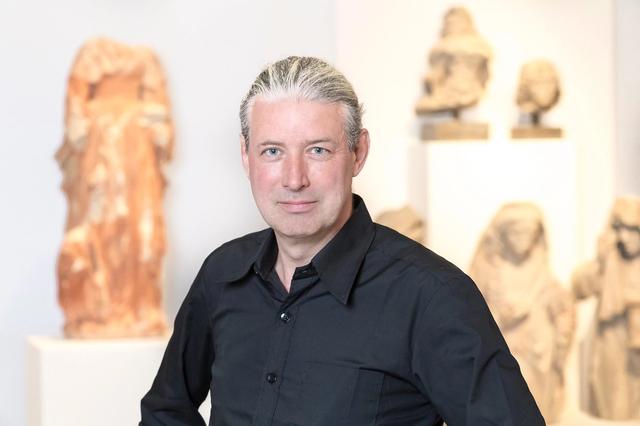
On 25 March 2023, the Centraal Museum opened the exhibition I'm Leaving. Marja Bosma Says Goodbye. In it, curator of modern art Marja Bosma looks back on her career of more than 30 years at the Centraal Museum.
Proud
A period in which she not only saw several museum directors come and go, but also witnessed the art and museum world change completely, particularly over the past ten years. She also curated dozens of exhibitions—from large to small—and was involved in many different acquisitions for the museum collection. After all those years, what is she most proud of?
René de Kam, Curator of Urban History, spoke with departing curator Marja Bosma about her work at Centraal Museum and beyond.
Never boring
Anyone who strikes up a conversation with Marja Bosma will not be bored. Not only does she know a great deal about a wide range of subjects—modern art, but also architecture, urban planning, history, film and pop music—she also knows an extraordinary number of people. So during the conversation, the names of dozens of artists fly back and forth, with a passing mention of the portrait Marlene Dumas painted of her in 1996, now part of the Centraal Museum’s collection. In any case, the conversation soon ranges far and wide. In no time at all, we are talking about the French philosopher Louis Althusser and Utrecht punks, then Susan Sontag and Jules Verne, before veering off via the biblical ‘broad and narrow way’ to Amsterdam, Basel, Berlin and Paris, eventually arriving in the heart of Utrecht. And along the way, we also briefly touch on literary theory and its application in art history.
Writing, writing, writing
The conversation also turns to the art world of the 1980s and 1990s, when Bosma first entered the profession. It was a time when a handful of male museum directors—she calls them the ‘Fat Necks Club’—called all the shots. They decided who was cool and whose work was displayed in the major museums. This was the art world in which Marja had to find her way. Looking back, she believes that writing about art helped her enormously. In the late 1980s, for example, she worked as a temporary curator at Museum Fodor in Amsterdam, where she learned a great deal not only through direct contact with various artists, but also by contributing to the museum’s own magazine. She would effortlessly fill half of each issue, also addressing social issues such as the shortage of artists’ studios in Amsterdam.
As an intern, Marja Bosma worked on the 1982 exhibition Charley Toorop 1891-1955, which also featured the 1931 painting Bistro.
Ideas galore
Utrecht also played an important role in her search for a place of her own in the art world. This was, of course, because she had begun studying there in the late 1970s, but even more influential was the internship she completed at the Centraal Museum in 1981 and 1982. There, she helped organize the exhibition Charley Toorop 1891-1955, which was on view in 1982. She enjoyed working in a museum and, moreover, had ideas to spare. She proposed to the then director, Adeline Janssens, that they create an exhibition on monochrome art at the museum’s branch on Maliebaan at the time. It was an interesting plan, but it would not come to fruition. Not yet, at least, as later events would show.
Contemporary art in Utrecht
The 1980s saw major changes in the field of modern art in Utrecht. Because the Centraal Museum had paid too little attention to contemporary art under the directorship of Elisabeth Houtzager (1951–1972), the municipality of Utrecht took the initiative to open the Hedendaagse Kunst-Utrecht museum in 1970, housed in the former post office at Achter de Dom 14. Wouter Kotte, the municipal art education consultant, became its director. Prompted in part by budget cuts, but also because such a separation between the arts had become less necessary under the directorship of Adeline Janssens (1972–1988), the Municipal Museums Service was established in 1982, bringing both the Centraal Museum and Hedendaagse Kunst-Utrecht under its umbrella. This marked the beginning of a process of integration, and in 1987 Hedendaagse Kunst-Utrecht closed its doors altogether to become fully incorporated into the Centraal Museum. When Janssens retired, her successor, Sjarel Ex (1988–2004), became responsible for overseeing the merger. Marja Bosma, however, would also play a role in it.
'Daydreaming is not an option'
After various career moves—including several years as a lecturer in the Department of Art History at Utrecht University and, as mentioned, a period as a curator at Museum Fodor in Amsterdam—Bosma was appointed Head of Exhibitions at the Centraal Museum in 1990. Although she greatly enjoyed the role, a year later she nevertheless succeeded Libuse Brozková-Dolezalová as curator of modern art, a position she would go on to hold for more than thirty years. In that role, she was able to bring her ideas and dreams for the museum to life. Her first focus was monochrome art, in the major exhibition Dumb Painting, which was held in 1992 in De Stallen, then an almost brand-new exhibition space. With this exhibition, the newly appointed curator not only fulfilled a long-held ambition, but also drew attention to a form of painting that was considered difficult to engage with at the time. She did so under the motto: ‘No drifting off into dreams; associations are discouraged.’ With this exhibition, Marja had established her signature as the Centraal Museum’s curator of modern art. Many more groundbreaking exhibitions would follow.
Top 4 exhibitions
Now that Marja is leaving the Centraal Museum thirty years later, it is interesting to look back with her. Which exhibition does she consider her finest? And what are the most important or enjoyable objects she added to the museum collection as curator of modern art? She does not have to think long about possible answers to those questions. First, the exhibitions in chronological order.
Marja Bosma’s first major exhibition at the Centraal Museum was Dumb Painting in 1992.
Dumb Painting (1992)
She still considers Dumb Painting one of her most beautiful and important exhibitions. To put it together, she travelled throughout Europe to speak with various artists and see their work. They included Ian Davenport, Bernard Frize, Nan Groot Antink, Klaas Kloosterboer, Steven Parrino, Günther Umberg, Marthe Wéry and Peter Zegveld. She discovered that for many modern artists, the creative process mattered more than the final product alone. So it was all very different from what she had learned at university. Making art was far less rational than she had thought. Ian Davenport, for example, used ordinary wall paint, which he then poured over the canvas with great precision. Nan Groot Antink used natural pigments, and after preparing the canvas, she immersed it completely in a dye bath. These different methods produced a wide variety of monochrome artworks. In fact, no two were alike.
The 2012 exhibition God Save the Queen. Art, Squatting, Punk: 1977–1984.
God save the Queen (2012)
The second exhibition she still looks back on with a certain pride is God Save the Queen. Art, Squatting, Punk: 1977–1984, which was on display in 2012. The exhibition’s title was taken from the 1977 song of the same name by the famous and notorious English punk band the Sex Pistols, an indictment of those in power at the time. The exhibition featured work by Walter Dahn, Georg Dokoupil, Keith Haring and Rammellzee, among others. The artists René Daniëls, Hewald Jongenelis, Rob Scholte and Roland Sips joined forces to form a so-called Spray Armee, in an attempt to create a Dutch response to American graffiti. But as the subtitle made clear, the exhibition was not just about art, but also about the squatting scene and the music of the period. Especially for the exhibition, Dutch broadcaster VPRO compiled several documentaries highlighting protest actions from that era, such as the notorious riots during Beatrix’s coronation in 1980. Visitors could also listen to the revolutionary changes taking place in music during those years at the exhibition’s music bar. Its walls were covered with album sleeves by major English punk and new wave bands such as The Damned, The Clash, The Jam and New Order. Dutch acts such as Amsterdam’s The Ex and Rotterdam’s Rondos could also be heard there.
The World of Utrecht was the permanent collection display curated by Marja Bosma, which opened in April 2016.
The World of Utrecht (2016)
The third project on Marja Bosma’s list is the permanent collection display The World of Utrecht, which opened in April 2016. Above all, she wanted to give visitors plenty to see. Looking was far more important than knowing and reading. She was well aware that visitors could enter the display at four different points. Those ‘entrance galleries’ therefore needed to feature something extra. Rietveld, for example, or the Utrecht gardens with works by Roelant Savery. In any case, everything had to be visually overwhelming and show that the world of Utrecht—as the museum’s motto put it at the time—was grand and all-encompassing. And, above all, that it extended far beyond the city limits.
Marja Bosma’s last major exhibition was The World of Pyke Koch in 2017.
Pyke Koch (2017)
The last on her list is also the last major exhibition she curated at the museum: The World of Pyke Koch, which ran from 18 November 2017 to 18 March 2018. Alongside a comprehensive overview of Koch’s work through the years, the exhibition also featured contemporaries such as Carel Willink, Raoul Hynckes, Charley Toorop, Georg Grosz and Christian Schad. Attention was also paid to the political context in which Koch’s work was created. Koch’s open flirtation with National Socialism in the 1930s was certainly not glossed over, but explicitly addressed. To provide a better understanding of this history, Ad van Liempt compiled several historical documentaries.
A ten-cent coin and a guilder
In response to the question of which objects she likes best among those she has added to the museum’s collection as curator of modern art, Bosma selected two works:
Guilder by John Körmeling from 1988.
Guilder (1988)
The first is Gulden by John Körmeling (Amsterdam, 1951), dating from 1988. The work was acquired in 1995 with the support of the Mondriaan Foundation. What Bosma finds so intriguing about this work is that Körmeling altered the inscription around the edge of the coin—something that can be clearly seen through the magnifying glass that accompanies the artwork. Instead of ‘God be with us’, it now reads ‘And this here while I’. In doing so, Körmeling shows that the phrase ‘God be with us’ is completely outdated. Indeed, as Körmeling himself once put it: “God no longer exists, and instead it is all about our individualistic self.” This inscription therefore makes the guilder highly personal. At the same time, the word ‘while’ also introduces a sense of time passing. And it is precisely these two aspects—the personal dimension and the spatial passage of time—that make the work so special to Marja Bosma.
Untitled by Wim T. Schippers, from 1965.
Untitled (1965)
The second object Bosma wants to highlight is Untitled by Wim T. Schippers from 1965. It consists of a table tennis paddle with a ball mounted on a panel and covered in brown felt. The work was acquired in 1997 with support from the Mondriaan Foundation. By neutralising the two objects with felt, ‘Schippers created an abstract, formal composition…’, as Bosma described it in the 2002 museum catalogue on the Modern Art collection. More than twenty years later, she says of it: ‘It’s simply a beautiful form, and so simple!’
The exhibition I'm Leaving. Marja Bosma Says Goodbye could, as far as I'm concerned, just as easily have been called Marja Bosma was here! Because she certainly made her presence felt at the museum—for no less than thirty years. We will miss her extraordinary contribution very much indeed!
Marja's exhibitions
View the exhibitions featured in this article in the Exhibition Archive.
Marja's favorite objects
View in the collection.